


Endodontic Treatment
The main cause of toothache: pulpitis
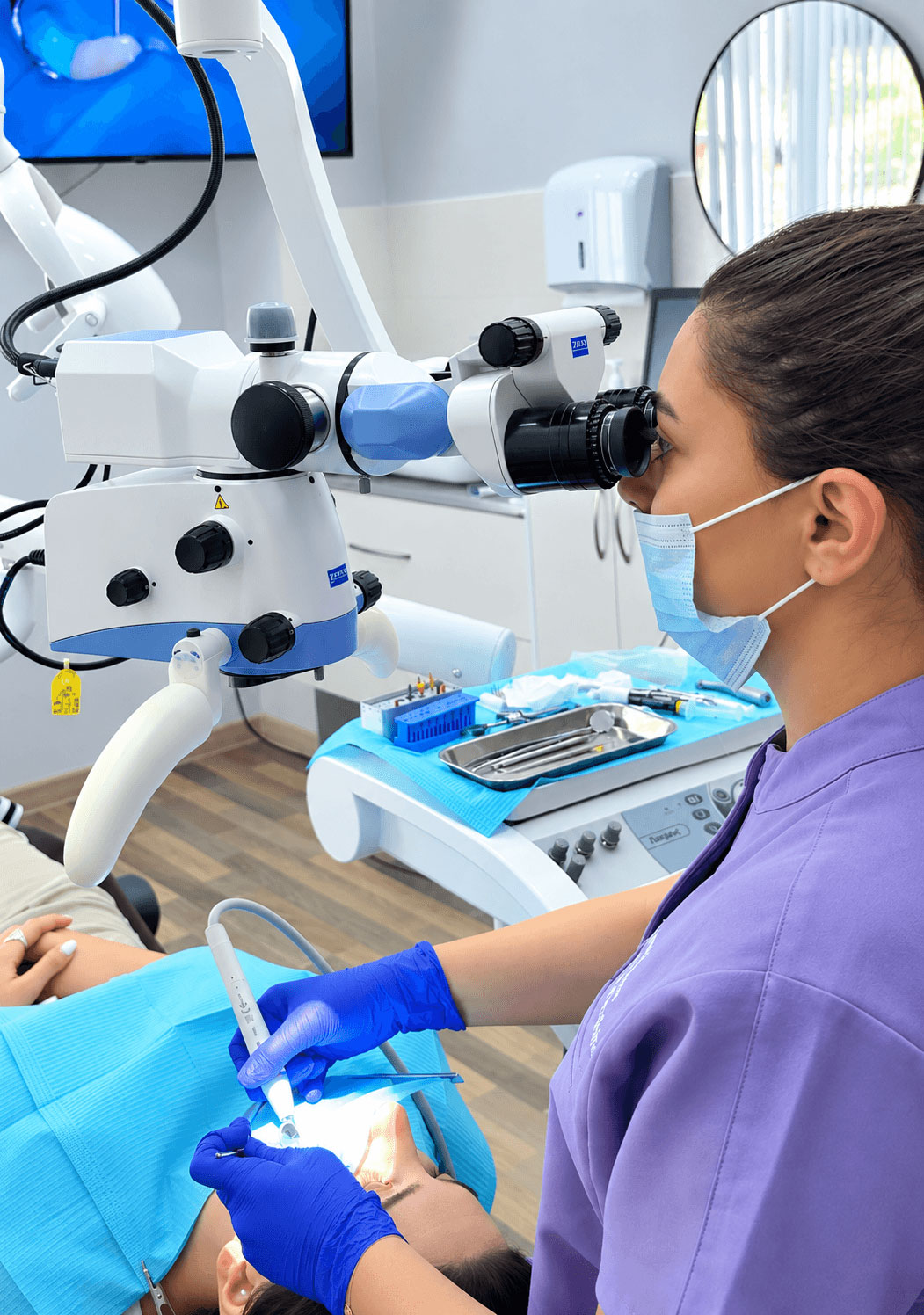
The main goal of endodontic treatment is to remove infected or damaged tissues, thoroughly clean and disinfect the root canals, prevent the spread of inflammation, and, whenever possible, preserve the natural tooth.
Inside the tooth is the pulp, a soft tissue rich in nerve endings and blood vessels that provides the tooth with nutrients and is responsible for its sensitivity.
Inside the tooth is the pulp, a soft tissue rich in nerve endings and blood vessels that provides the tooth with nutrients and is responsible for its sensitivity.
Deep tooth decay, mechanical trauma, or poorly performed previous dental procedures can allow harmful bacteria to reach the pulp, causing an inflammatory process known as pulpitis.
The most common symptom of pulpitis is tooth pain. It may be sharp, throbbing, or spontaneous and often becomes more intense at night. Nighttime tooth pain, as well as prolonged sensitivity to hot, cold, or sweet foods and drinks, may indicate damage to the dental pulp. In some cases, tooth nerve pain can radiate to the ear, temple, or jaw, making it difficult to identify the exact source of the pain without a professional examination.
When looking for ways to relieve tooth pain, many people rely only on painkillers. However, it is important to understand that pain medication provides only temporary relief and does not address the underlying cause of the pain.
If the dental pulp is irreversibly damaged or infected, endodontic treatment may be required. The appropriate treatment approach depends on the overall condition of the tooth, the severity of inflammation, and the extent of the damage. In certain cases, it may be possible to preserve healthy pulp tissue, while in others, complete removal of the pulp may be necessary, followed by root canal cleaning, disinfection, and hermetic sealing.
Pulp amputation is an endodontic procedure in which only the affected pulp in the crown of the tooth is removed, while the healthy pulp in the root portion is preserved.
Pulp amputation is an endodontic procedure in which only the affected pulp in the crown of the tooth is removed, while the healthy pulp in the root portion is preserved.
This approach helps preserve as much of the tooth’s natural structure as possible and extend the lifespan of the natural tooth.
The suitability of pulp amputation is determined individually, taking into account the condition of the tooth, the extent of pulp damage, and the results of the examination.
Root Canal Treatment
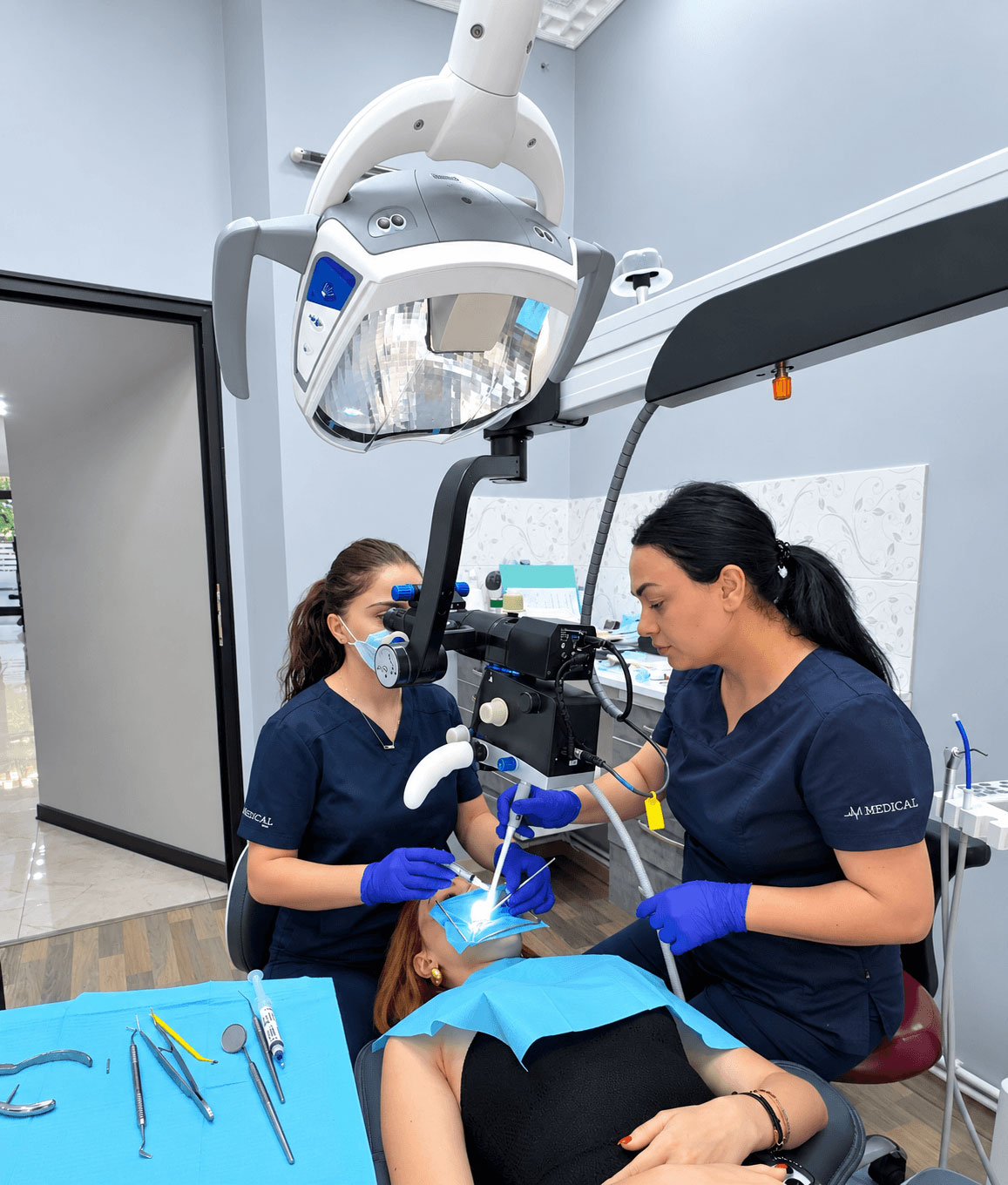
Root canal treatment is an important stage of endodontic treatment aimed at removing infected or damaged tissue, thoroughly cleaning and disinfecting the root canals, and then hermetically sealing them to prevent reinfection and preserve the natural tooth.
The structure of the root canal system can vary depending on the type of tooth and individual anatomical characteristics. For this reason, the treatment approach and its stages are determined individually for each patient.
Diagnosis։ Treatment begins with a thorough examination and diagnosis of the tooth. The dentist evaluates the nature of the pain, the overall condition of the tooth, and, when necessary, recommends an X-ray examination. This allows the dentist to assess the structure of the root canals, their number and length, as well as the condition of the tissues surrounding the tooth root.
Procedure։ The treatment is performed under local anesthesia, so the patient usually does not experience pain during the procedure. Using specialized endodontic instruments, the affected tissue is removed, while the root canals are carefully prepared, cleaned, and disinfected.
After preparation, the root canals are hermetically sealed with specialized materials to reduce the risk of reinfection and create the necessary conditions for preserving the tooth.
Tooth Restoration։ After root canal treatment, proper restoration of the tooth crown is also essential. Depending on the clinical situation, the tooth may be restored with a filling, inlay, or dental crown.
In cases involving significant loss of tooth structure, it is particularly important to choose a restoration method that will protect the treated tooth and reduce the risk of further damage or fracture.
The success of treatment depends not only on thorough cleaning and hermetic sealing of the root canals, but also on proper restoration of the tooth and maintaining good oral hygiene.
Root Canal Retreatment
Root canal retreatment is performed when an infection or inflammatory process persists or develops again in the root canals after previous endodontic treatment. Retreatment may also be necessary when certain areas of the root canals were not fully treated or were not properly sealed during the initial procedure.
The need for retreatment may be indicated by recurrent tooth pain, pain or discomfort when chewing, swelling around the tooth, as well as changes in the tissues surrounding the tooth root detected on an X-ray. In some cases, these changes can develop without noticeable symptoms and may only be detected during a dental examination.
During retreatment, the dentist first evaluates the condition of the tooth and the previously treated root canals. When necessary, the existing filling material is removed from the root canals, after which they are thoroughly prepared, cleaned, and disinfected.
Once cleaning and disinfection are complete, the root canals are hermetically sealed, and the crown of the tooth is restored using an appropriate method.
The need for retreatment may be indicated by recurrent tooth pain, pain or discomfort when chewing, swelling around the tooth, as well as changes in the tissues surrounding the tooth root detected on an X-ray. In some cases, these changes can develop without noticeable symptoms and may only be detected during a dental examination.
During retreatment, the dentist first evaluates the condition of the tooth and the previously treated root canals. When necessary, the existing filling material is removed from the root canals, after which they are thoroughly prepared, cleaned, and disinfected.
Once cleaning and disinfection are complete, the root canals are hermetically sealed, and the crown of the tooth is restored using an appropriate method.
Cost of endodontic treatment in Yerevan
The cost of endodontic treatment starts at 97 USD (35,000 AMD) and depends on the diagnosis, complexity of the procedure, number of treatment stages required, and the selected restoration method, such as restoring the crown with a filling or a ceramic veneer. Therefore, the final treatment cost is determined after a professional examination and any necessary diagnostic tests.

Why Choose MaryClinic?
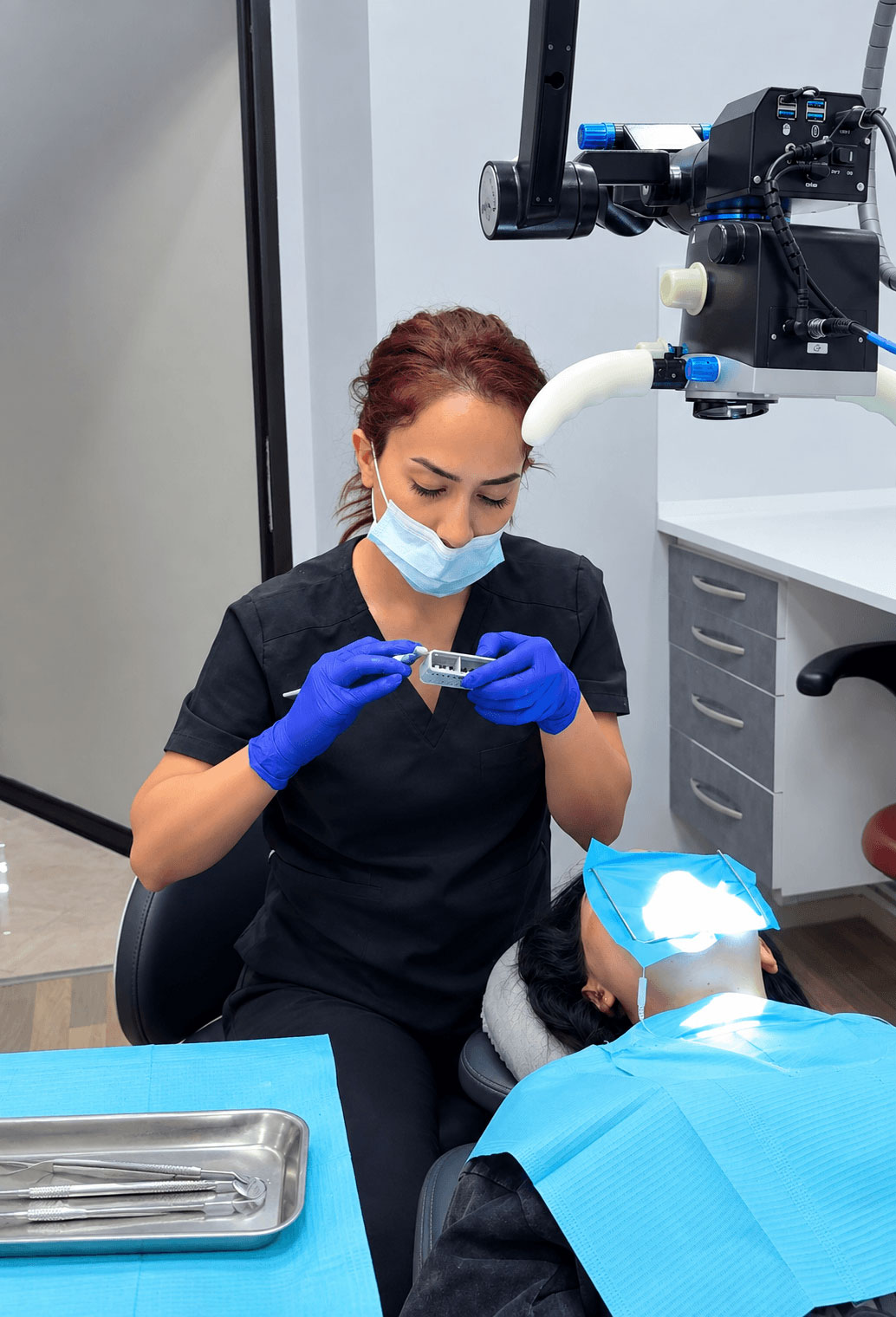
At MaryClinic, we focus not only on treatment outcomes but also on providing an individualized approach to every patient. The clinic uses modern diagnostic and treatment technologies, including digital X-rays, 3D imaging, dental microscopes, and other advanced equipment. These technologies allow our specialists to thoroughly assess the condition of the teeth and develop an accurate, personalized treatment plan.
If you are looking for root canal treatment in Yerevan, Armenia, MaryClinic offers the necessary diagnostic examinations and an individualized treatment plan based on the condition of your tooth.
Don’t put off your dental visit. Schedule a consultation today and receive your personalized treatment plan.