
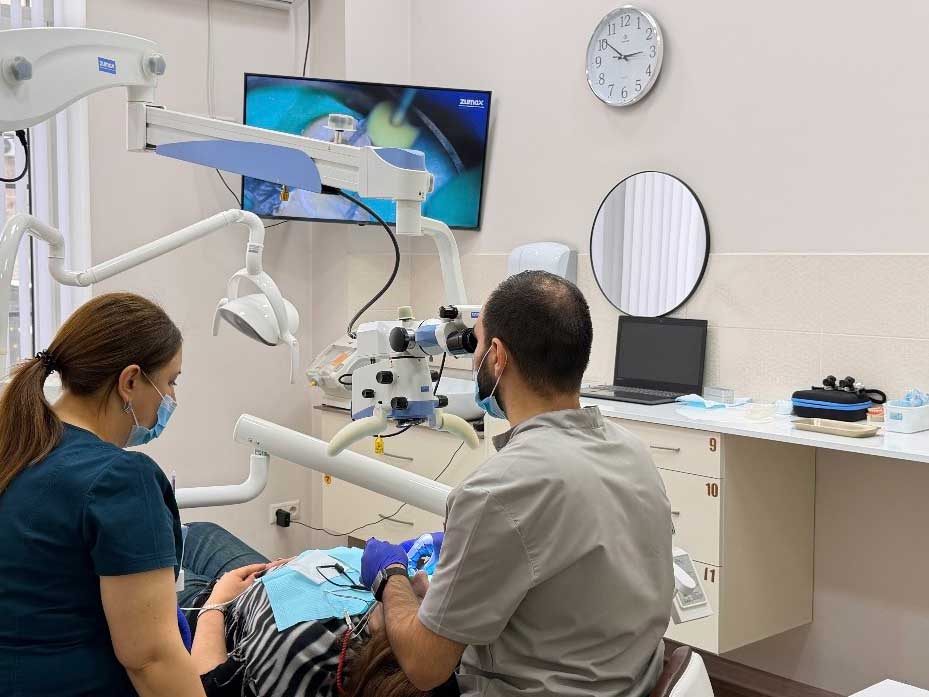


Tooth Extraction
When Is Tooth Removal Recommended?
Although the primary goal of modern dentistry is to preserve natural teeth for as long as possible, there are clinical situations in which conservative treatment is no longer effective, and tooth extraction becomes a necessary and medically justified step.
In such cases, timely intervention plays a crucial role not only in relieving pain and discomfort but also in protecting adjacent teeth, soft tissues, and the overall oral health. Delaying treatment may lead to various complications, including the spread of infection, damage to surrounding tissues, or deterioration of the bone structure.
Patients often wonder whether they should consult a general dentist or a maxillofacial surgeon. This decision is never made independently; it is based on a thorough clinical examination, as well as radiographic and other necessary diagnostic imaging, which allows the specialist to accurately assess the condition of the tooth and choose the safest and most effective treatment option.
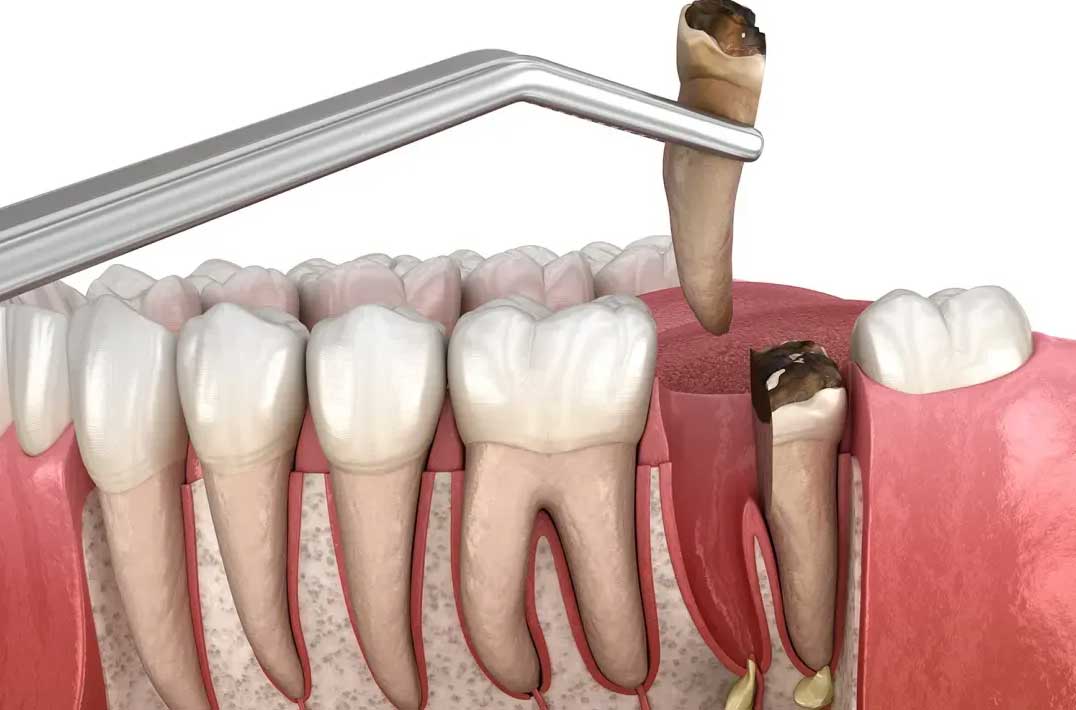
Simple and Surgical Tooth Extraction
Depending on the clinical condition, position, and accessibility of the tooth within the oral cavity, the specialist selects the most appropriate and safe extraction method—simple or surgical extraction. This approach ensures maximum control, reduces the risk of complications, and promotes faster recovery.
Simple Tooth Extraction
Simple tooth extraction is performed in cases where the tooth is fully visible above the gum line, is accessible, or has sufficient mobility. In such situations, the procedure is considered relatively quick and minimally invasive.
How the procedure is performed: The process begins with local anesthesia, ensuring that the patient does not feel pain and remains comfortable throughout the procedure. The dentist then uses specialized dental instruments to gently loosen and remove the tooth from its socket.
One of the main advantages of this method is that it usually does not require gum incisions or sutures, which contributes to faster healing and minimal post-operative discomfort.
Surgical (Complex) Tooth Extraction
Surgical extraction is required in cases where the tooth cannot be removed using a simple approach due to limited access or complex anatomical conditions. This may include teeth that are partially or fully impacted, broken below the gum line, have curved roots, are fused to the bone, or present other complications.
How the procedure is performed: In these cases, the specialist makes a small incision in the gum to access the tooth. If necessary, the tooth may be divided into smaller sections to allow for safe removal. In some cases, a small amount of bone tissue may also be removed. At the end of the procedure, surgical sutures are placed to ensure proper healing.
Wisdom Tooth Removal
Wisdom tooth extraction is a commonly performed procedure in modern dentistry. These teeth usually erupt later in life, when the jaw structure is already fully developed, and in many cases there is insufficient space for them to grow properly.
Due to lack of space or improper positioning, wisdom teeth may cause various problems, ranging from pain and discomfort to pressure on adjacent teeth, inflammatory processes, or repeated gum irritation.
Wisdom tooth removal can be performed using either a simple or surgical approach, depending on the tooth’s position, eruption stage, and root anatomy. Fully erupted and accessible wisdom teeth are typically removed with a simple extraction under local anesthesia. However, if the tooth is partially or fully impacted, tilted, or located within the bone, a surgical approach is required to ensure a controlled, safe, and precise removal.

Why Choose MaryClinic?
MaryClinic is a modern dental center that prioritizes patient health, safety, and comfort. We combine professional expertise, advanced technology, and an individualized approach to ensure high-quality treatment for every patient.
Our team consists of experienced dentists and maxillofacial surgeons who carefully evaluate each case and select the most effective and least risky treatment option. Whether it is a simple extraction, a complex surgical procedure, or additional dental treatment, every step is planned with precision and responsibility.
Book your appointment at MaryClinic today and receive an individual consultation from our experienced specialists.


Frequently Asked Questions
-
In modern dentistry, local anesthetics are so effective that you feel absolutely no pain during the tooth extraction. As for the bleeding, immediately after the extraction, the doctor places a sterile gauze pad over the wound, which should be kept pressed for about 10–15 minutes. After that, the bleeding stops. On the first day, your saliva may have a slightly pinkish tint, which is completely natural and nothing to be afraid of.
-
For the wound to heal quickly and without complications, it is important to follow a few simple rules:
• Do not eat anything for about 2–3 hours after the extraction.
• Do not rinse your mouth with water or any other mouthwash on that day, so that the blood clot, which is crucial for healing, does not get dislodged.
• Do not consume hot food or drinks, and avoid heavy physical labor.
• Eat soft food at room temperature, and chew your food on the opposite side. Brush your teeth with care. Follow your doctor's instructions. -
It is not mandatory if they are healthy and do not cause any issues. If a wisdom tooth (also called the 8th tooth) has erupted correctly in the dental arch, has its opposing antagonist tooth on the other jaw, participates in chewing, and does not damage adjacent teeth, we can preserve it. However, if it is impacted or partially erupted (meaning it is hidden under the gum), is growing in the wrong direction, pushes and misaligns other teeth, or causes frequent gum inflammation, then extraction becomes a necessity.