
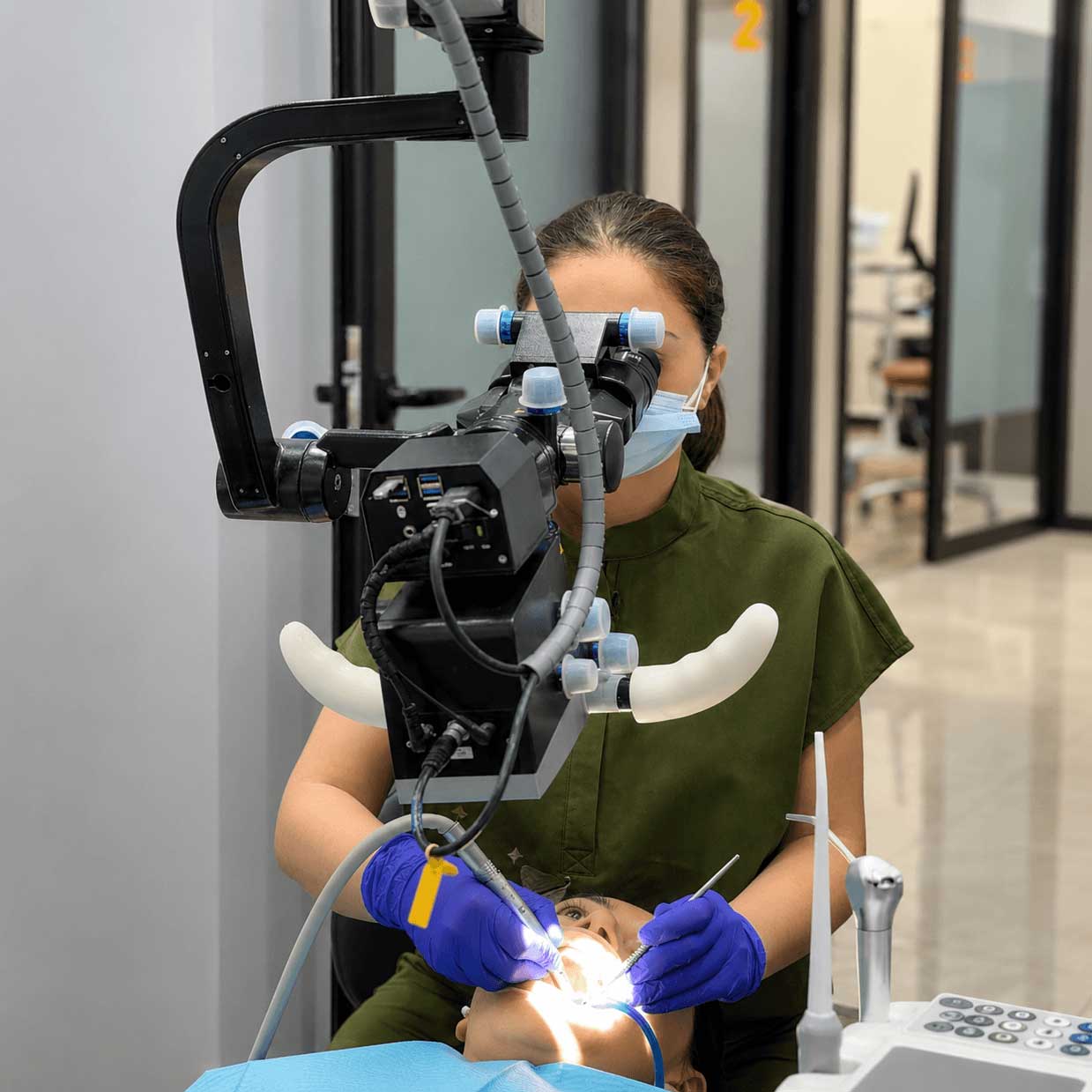


Dental Treatment Under a Microscope
The Role of a Dental Microscope in Modern Dentistry
Precision is one of the most important factors in successful dental care. Today, dental treatment under a microscope has become an integral part of modern dentistry, enabling dentists to examine tooth structure, root canals, and surrounding tissues with exceptional clarity. Thanks to advanced magnification and high-quality illumination, even the smallest details—often invisible to the naked eye—can be detected and evaluated with confidence.
A question many patients ask is, what is a dental microscope? A dental microscope is a high-precision optical device specifically designed for dental procedures. It enhances visibility throughout every stage of treatment, helping dentists make more accurate clinical decisions while preserving as much healthy tooth structure as possible.
Many dental conditions, including microscopic cracks, hidden decay, and complex root canal anatomy, can be difficult to identify during a conventional examination. A dental microscope allows these issues to be detected at an early stage, supporting more accurate diagnoses and personalized treatment planning.
The benefits of a dental microscope are especially evident in complex dental procedures where precision is essential. By providing greater control throughout treatment, it helps improve clinical accuracy, supports minimally invasive dentistry, and contributes to more predictable, long-lasting outcomes. As a result, dental treatment under a microscope offers patients a higher standard of care with greater comfort, safety, and confidence.
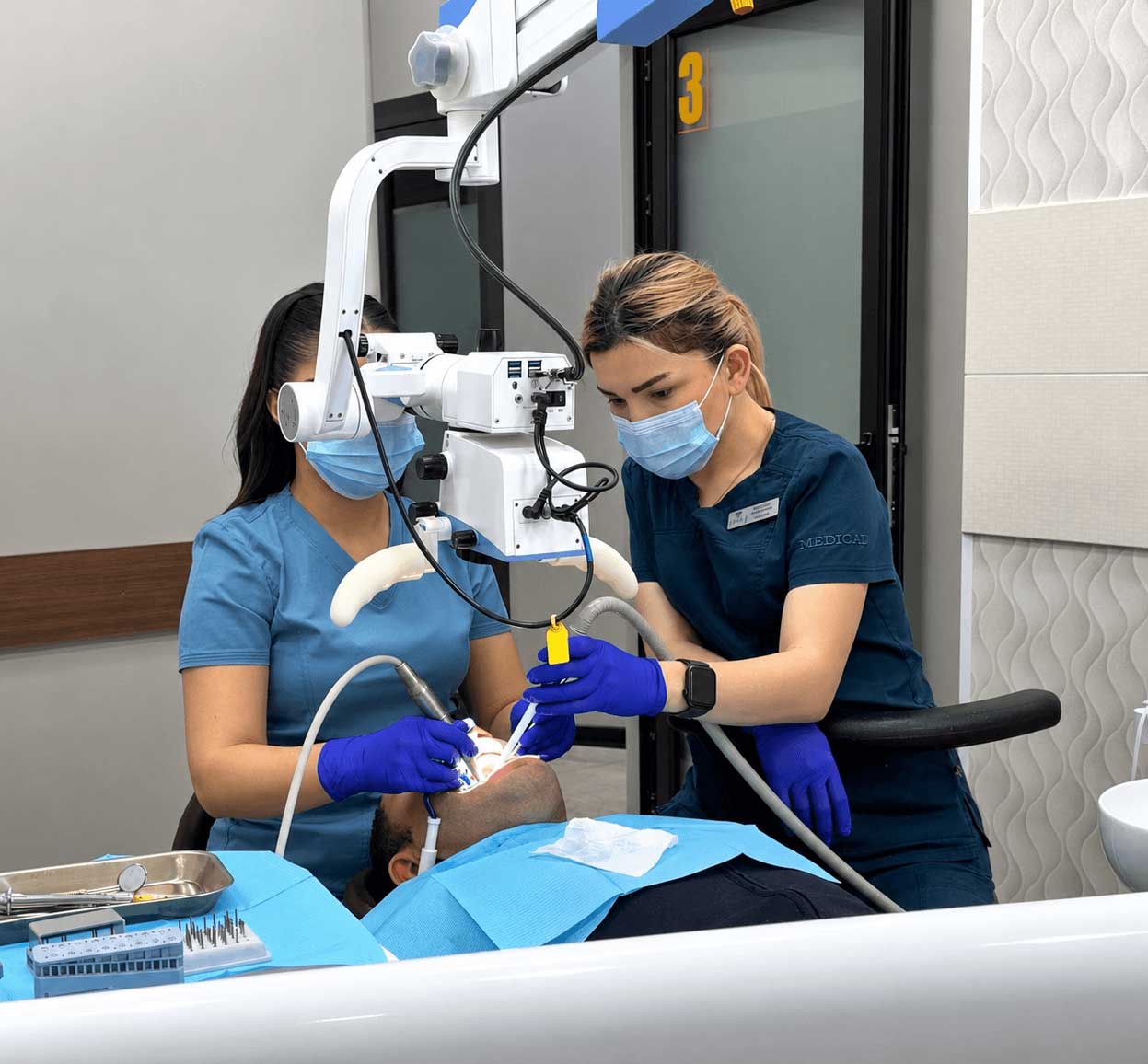
Features of Dental Treatment Under a Microscope
One of the defining features of dental treatment under a microscope is the enhanced magnification and illumination it provides throughout every stage of the procedure. This allows dentists to visualize fine anatomical details with exceptional clarity, perform highly precise interventions, and preserve as much healthy tooth structure as possible.
Microscope-assisted dentistry is widely used across a range of procedures, from the treatment of dental caries to complex endodontic therapy. During cavity treatment, the microscope enables the dentist to distinguish between healthy and infected tissue, ensuring that only the decayed portion of the tooth is removed while maintaining the integrity of the surrounding structure.
The technology is particularly valuable in root canal therapy. A common question patients ask is, do you need a microscope for a root canal? While root canal treatment can be performed without one, a dental microscope significantly improves the level of precision. It helps dentists locate narrow, curved, or additional root canals, thoroughly clean and disinfect the canal system, and achieve a more accurate seal, increasing the long-term success of the treatment.
A dental microscope is also invaluable during root canal retreatment. It helps identify problems that may remain undetected during a conventional examination, such as untreated canal areas, incompletely cleaned canals, or deficiencies in a previous root canal filling.
In some cases, fragments of fractured endodontic instruments may remain inside the root canal following earlier treatment. Using a dental microscope, the dentist can accurately assess their position and, when clinically appropriate, safely remove them or determine the most effective treatment approach for the individual case.
Beyond endodontics, dental microscopes are also used to detect microscopic tooth fractures, remove old restorations, perform restorative procedures, and assist in other complex treatments where precision is essential.
Benefits of Dental Treatment Under a Microscope
Greater treatment precision։ High magnification allows every stage of treatment to be performed with exceptional accuracy, minimizing the risk of technical errors and improving clinical outcomes.
Earlier detection of dental problems։ Hidden decay, microscopic cracks, and other subtle abnormalities can be identified before they develop into more serious conditions, enabling timely and conservative treatment.
Maximum preservation of healthy tooth structure։ By clearly distinguishing healthy tissue from damaged tissue, dentists can remove only what is necessary, following the principles of minimally invasive dentistry.
Improved management of complex cases։ Enhanced visualization makes it easier to treat challenging anatomical structures, increasing the predictability and success of advanced dental procedures.
Long-lasting clinical outcomes։ More accurate treatment reduces the risk of reinfection, complications, and retreatment, helping patients achieve durable and predictable results.
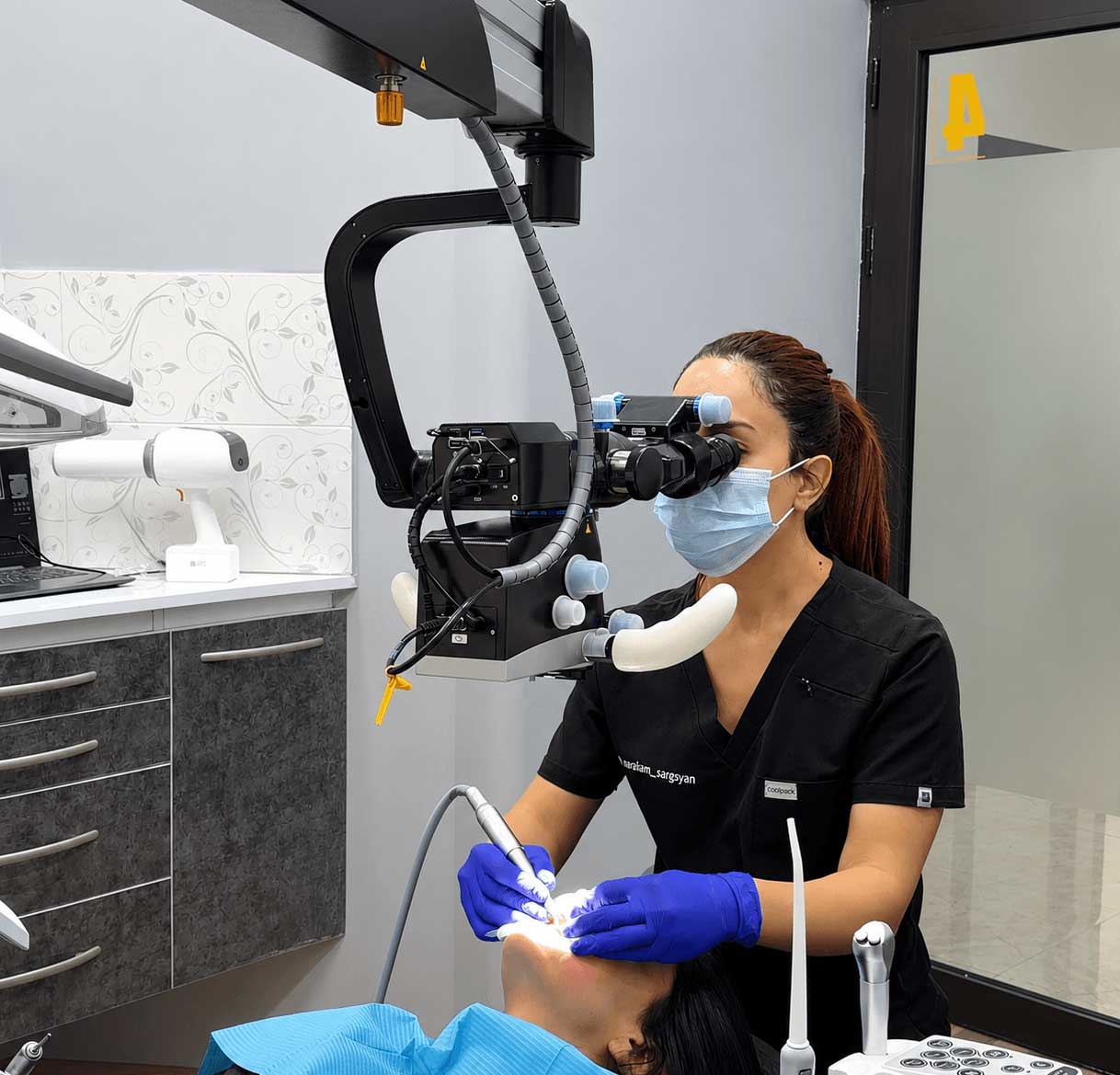
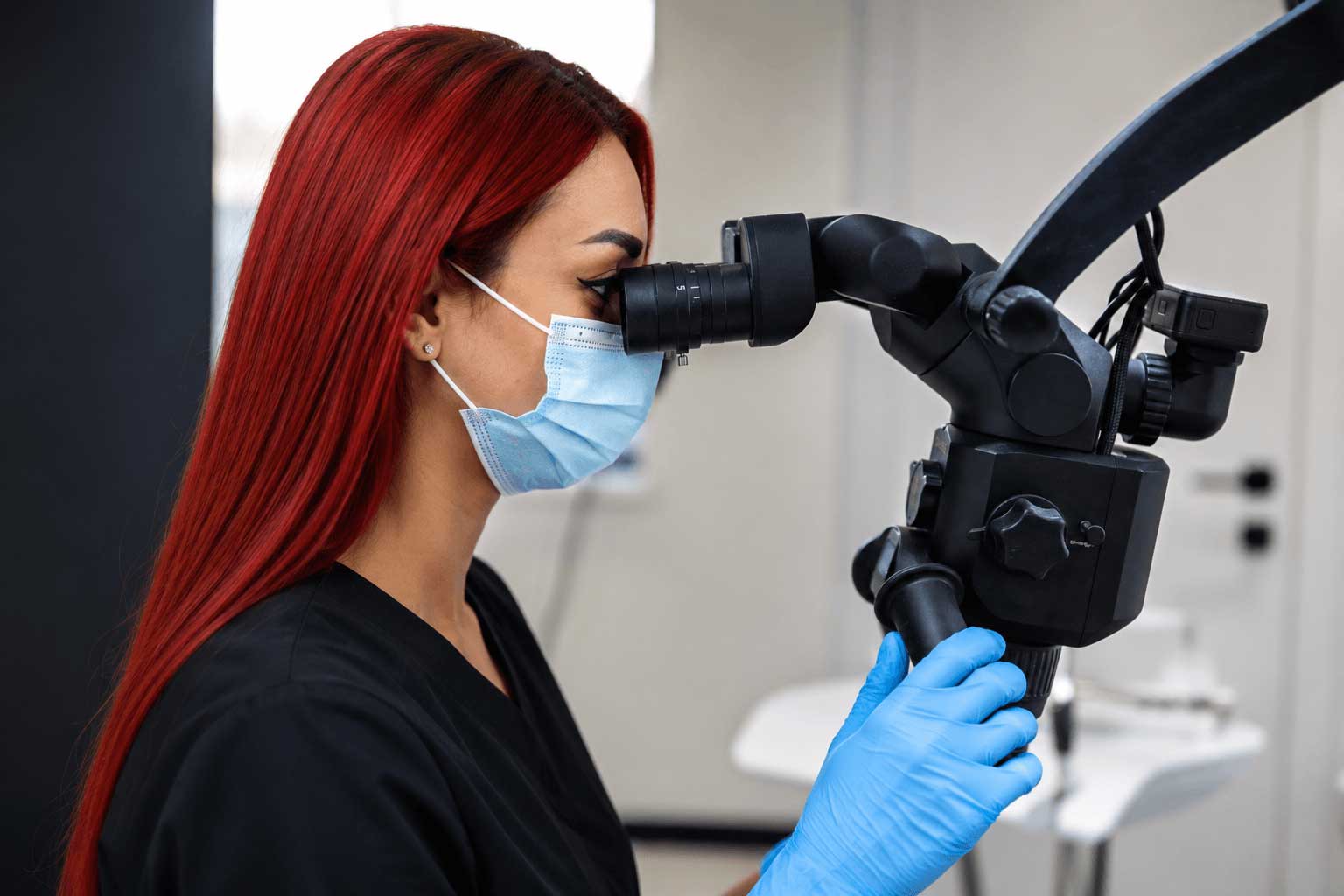
The Cost of Microscopic Dental Treatment in Yerevan
The cost of dental treatment under a microscope varies depending on the complexity of the procedure, the overall condition of the tooth, the location and extent of the decay, and the number of root canals requiring treatment.
At MaryClinic, microscope-assisted dental treatment starts from $95 USD (AMD 35,000). The final cost is determined after a comprehensive consultation and clinical examination, during which the dentist evaluates the condition of the tooth, the scope of the required treatment, and the most appropriate treatment approach.
While microscope-assisted procedures may involve advanced technology and specialized expertise, they offer greater treatment precision, help preserve healthy tooth structure, and contribute to more predictable, long-term clinical outcomes.
Why Choose MaryClinic?
At MaryClinic, we believe exceptional dental care begins with experienced professionals, accurate diagnosis, and the latest dental technology. By combining clinical expertise with a personalized approach, we create treatment plans tailored to each patient's individual needs, ensuring predictable, long-lasting results.
Our clinic is equipped with advanced diagnostic and treatment technologies, including a dental microscope, which enables our dentists to detect even the smallest details and perform procedures with exceptional precision. This technology supports more conservative, minimally invasive treatment while helping preserve healthy tooth structure whenever possible.
Patients are often referred to us by other dental clinics and dentists when treatment requires the use of a dental microscope and highly precise endodontic procedures. Such cases often involve complex root canal treatment or retreatment, where enhanced magnification and advanced clinical expertise are essential for achieving predictable, long-term results.
Every patient receives individualized care from the initial consultation through the completion of treatment. Our focus extends beyond treating the immediate problem—we are committed to preserving your natural teeth, restoring optimal oral health, and ensuring a comfortable, stress-free experience throughout your visit.
Book your consultation today and take the first step toward a healthier, more confident smile.


Frequently Asked Questions
-
A modern dental microscope magnifies the image 20–30 times. Thanks to this, the doctor can see even the smallest details of the tooth's internal structure, root canals, and tissues, which are simply impossible to notice with the naked eye. The microscope enables the doctor to perform treatment under conditions of perfect visibility.
-
You should not only not refuse treatment under a microscope, but you should definitely opt for it when treating complex root canals or root canals that have previously been inadequately treated. Under a microscope, it becomes possible to remove a broken instrument fragment from root canals, find hidden canals, or seal a perforation in the tooth wall. In such complex situations, the microscope often becomes the only and final hope to save the tooth from extraction.
-
Treatment under a microscope is more expensive than conventional treatment. However, this is completely justified because the clinic utilizes expensive, high-precision equipment, the doctor requires specialized high qualifications, and the actual work is performed with maximum accuracy. This is, in fact, an investment in the longevity of the tooth, as the risk of complications or future tooth extraction is minimized after such treatment.